
Surplus Under Strain: How Election Spending Shrinks Zambia’s Fiscal Buffer
A fiscal buffer is a quiet thing until you need it. Zambia spent recent years rebuilding one — a primary surplus, the gap between revenue and spending before interest, that signals a government living within its means and able to absorb a shock. The IMF's latest...
Surplus Under Strain: How Election Spending Shrinks Zambia’s Fiscal Buffer
A fiscal buffer is a quiet thing until you need it. Zambia spent recent years rebuilding one — a primary surplus, the gap between revenue and spending before interest, that signals a government living within its means and able to absorb a shock. The IMF's latest...
8.5% and 4.3%: The IMF’s Inflation and Growth Call for Zambia
Numbers in a staff report are rarely the story; the direction of travel between them is. For Zambia, the IMF's latest projections tell a tale of two pressures pulling against each other. Inflation, which sat at 6.8% in April and comfortably inside the Bank of Zambia's...
Private-Sector-Led: The IMF’s Growth Prescription of Copper, Energy and Textiles
Zambia has spent the better part of a decade learning that stability is not the same as growth. The hard arithmetic of debt restructuring, fiscal consolidation and inflation control has steadied the ship, but a steady ship that does not move is still stuck. The IMF's...
Reopen the Pipeline: Why the IMF Wants TAZAMA Open-Access Fuel Restored
Every litre of diesel that moves a Zambian truck, fires a backup generator or runs a mine pump arrives through a bottleneck. The country is landlocked, its fuel is imported, and for decades the choke point has been the TAZAMA pipeline running up from Dar es Salaam....
Surplus Under Strain: How Election Spending Shrinks Zambia’s Fiscal Buffer
The IMF warns Zambia’s primary surplus will fall to 1.1% of GDP from 3.8%, on weaker tax collection, election spending and agricultural subsidies.
8.5% and 4.3%: The IMF’s Inflation and Growth Call for Zambia
The IMF projects Zambian inflation rising to 8.5% by end-2026 and real GDP growth of 4.3%, on weaker mining and normalising agriculture. What the figures mean.
Private-Sector-Led: The IMF’s Growth Prescription of Copper, Energy and Textiles
The IMF’s growth prescription for Zambia: private-sector-led, inclusive growth via non-distortive industrial policy in copper, energy, agri-business and
Reopen the Pipeline: Why the IMF Wants TAZAMA Open-Access Fuel Restored
The IMF wants Zambia to restore TAZAMA open-access fuel imports — a framework that halved import premiums before it was suspended amid Middle East conflict.
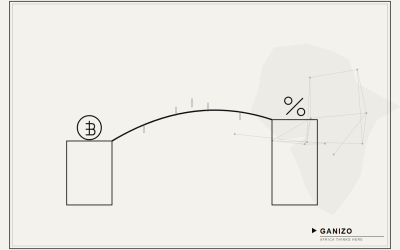
Water as Macro Policy: How Zambia Links WASH Investment to Inflation Control
Zambia is framing water and sanitation investment as inflation control and growth protection, arguing at the IMF–World Bank meetings that WASH is macro policy.
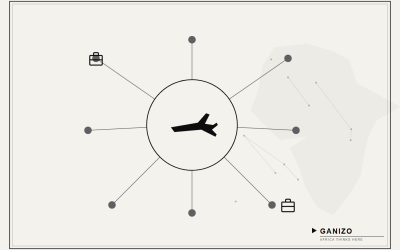
A Seat at the Table: Zambia Wins Vice-Chair Role at UNECA Finance Bureau
Zambia was elected third vice-chair of the Bureau of African Ministers of Finance at UNECA’s 58th session in Tangier, themed ‘Growth through Innovation’.

The Policy Bargain at the Centre of Heritage Tourism Beyond Victoria Falls
Beyond Victoria Falls, Zambia’s heritage sites lack roads, records and budgets. The policy bargain names the winners, the excluded and the reforms needed.

Pitch to Asia: How ZDA Sold 3 Mt Copper and 10 GW Power to Chinese Investors
At an April 2026 copper forum in China, Zambia’s ZDA pitched critical minerals and renewables, citing 3Mt copper by 2031 and 10,000 MW of generation.

Botswana–Oman Deals Span Minerals, Oil Storage and Solar
Botswana and Oman have signed agreements on joint mineral exploration, oil storage and renewable power. Why the breadth of the package is the real story.

The Risks Zambia Must Manage in Domestic Tourism as Zambia’s Resilience Market
Zambia’s domestic tourism faces a hard ceiling: transport costs and thin disposable income. Who wins, who is excluded, and the reforms the trade-off demands.

Cabanga Africa Launches Musika, a Verified B2B Sourcing Platform for SADC Businesses
Buyers post a requirement and receive one landed price from a verified supplier, with the border, paperwork and carrier carried on a single invoice There is a specific hour that every cross-border trader in Southern Africa knows. You have a buyer. You have a price....

What Could Derail Liuwa Plain, Bangweulu and Community Conservation?
Remoteness makes Zambia’s Liuwa and Bangweulu valuable and vulnerable. High operating costs, fragile access, who loses first and the reforms required.

The US$200m Holiday: How Zambia’s Fuel-Tax Relief Burned Through the Treasury
Zambia’s suspension of VAT and excise on fuel cost the Treasury about US$200m, as Musokotwane urged disciplined fiscal policy and warned of an energy-crisis

The Cobalt Gap: Why Zambia Exported More Than It Mined, 2019–2024
Zambia produced 1,401 tonnes of cobalt from 2019 to 2024 but exported about 1,876.7 — a gap rooted in by-product geology, weak copper output and data
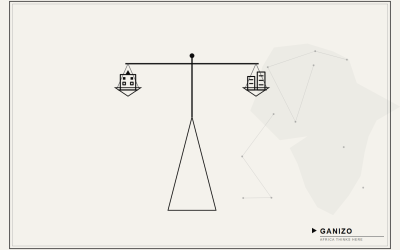
The Governance Test Behind Lower Zambezi: Tourism, Conservation and Development Pressure
Zambia’s Lower Zambezi pits short-term extractive investment against a lasting tourism landscape. The trade-off, the excluded and the reforms the valley needs.
From Strategic Thought To Decisive Action.
Moakanyi reports the market. The wider Cabanga ecosystem
helps you lead it — media, infrastructure and growth, one system.
Intelligence
Business media across Africa’s real economy.
Infrastructure
Websites engineered as your headquarters.
Growth
Marketing that turns visibility into revenue.
04
ACADEMY
The Digital Navigator Certification.