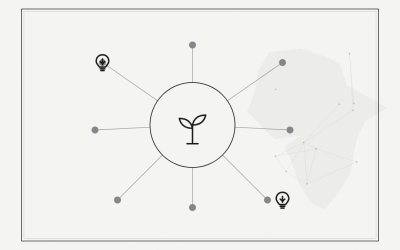
Every farm block in Zambia faces the same fork in the road. It can mature into an integrated agro-industrial corridor, where growing, aggregation, processing and logistics reinforce one another, or it can settle as an isolated estate that produces raw output and little else. The distance between those two outcomes is where the next six years of policy and capital will be decided, and it is worth mapping before 2031 arrives.
The Two Roads: Corridor or Isolated Estate
The isolated-estate scenario is the path of least resistance. A block attracts one large farm, it grows a commodity, and the value largely leaves with the truck. Jobs are seasonal, processing happens elsewhere, and the surrounding smallholders remain suppliers of raw material at the bottom of the chain. It is not failure exactly, but it is scale without depth.
The corridor scenario is harder and more valuable. Here the block becomes a cluster: primary production feeds local aggregation and storage, processing plants add value on site, and shared infrastructure lowers costs for everyone inside the perimeter. Agriculture accounts for a large share of Zambia’s employment, so the difference between these two roads is measured in livelihoods, not just tonnages. The takeaway: the point of a farm block is not the farm, it is the chain it anchors.
The Enablers: What Tips a Block Toward Integration
Several conditions decide which road a block takes. Reliable power and water make on-site processing viable rather than aspirational. All-weather roads keep aggregation moving in the rainy season, when isolated estates simply stop. Secure, bankable tenure lets out-growers invest and lenders lend. And an anchor investor genuinely committed to out-grower linkages, rather than an enclave operation, is what converts nearby smallholders from bystanders into the corridor’s base.
The sector’s structure gives these enablers weight. Zambia’s mix of crops, livestock and agro-processing potential is set out in the ZDA agriculture sector profile, which frames the country as a destination for value-adding investment rather than raw supply alone. That framing only holds if the enabling conditions turn up inside the blocks. The takeaway: integration is engineered, not hoped for.
The Indicators: What to Track Toward 2031
Scenarios are only useful if you can tell which one is unfolding. A handful of indicators separate a maturing corridor from a stalled estate. Watch the share of block output that is processed or aggregated locally rather than shipped raw. Watch the number of active out-growers actually selling into the anchor, not just registered around it. Watch private investment committed per block against public infrastructure delivered, since the ratio reveals whether the state’s spending is crowding capital in.
Track all-season road access and installed power capacity inside blocks, because these gate everything downstream. Track processing units established on or near blocks, the surest sign that value is being kept rather than exported. And track how much of the workforce is permanent versus seasonal, the quiet measure of whether a corridor is forming. Where these move together, a block is integrating; where they diverge, it is drifting toward enclave status. The takeaway: the indicators tell you the story before the annual report does.
The Choice Ahead: Deliberate Corridors
None of this happens by default. The isolated estate is what a block becomes when no one engineers anything more. The corridor is a deliberate construction, assembled from infrastructure, tenure, committed anchors and out-grower linkages that are designed in from the start rather than bolted on later.
For investors and policymakers, the strategic choice is whether to treat farm blocks as land deals or as system builds. The land-deal mindset produces estates. The system-build mindset produces corridors that diversify the economy, keep value onshore and pull smallholders up the chain. Zambia has the arable base and the crop mix to attempt the harder road. Between now and 2031, the useful question for anyone weighing a position is simple: is this block being built to grow a commodity, or to anchor a corridor. The answer decides the return, and it decides the reach.