
Farming – Agribusiness & Value Chains · Editorial
By Moakanyi Magazine · June 2026
A disease-control zone stops more than a virus. When the rules at its edge are unclear, it stops trade that was never dangerous in the first place, as traders hold back goods they are unsure they are allowed to move. The cost of that hesitation does not appear in any outbreak report; it appears as orders unfilled and shipments delayed. In April 2023, the response was not to loosen the zones but to explain them.
The Department of Veterinary Services listed the goods permitted to move across foot-and-mouth zones, including hides and processed meats, easing the confusion that had built up at the boundaries. The disruption it relieved was caused less by the rules than by uncertainty about them, which is a cheaper problem to fix and an easier one to overlook.
The Problem: Ambiguity Is Its Own Barrier
Foot-and-mouth zoning restricts the movement of live animals and high-risk products to contain outbreaks and protect Botswana's export status. But many goods carry little or no transmission risk. Processed meats have been treated in ways that neutralise the virus, and hides are not a meaningful vector once handled correctly, so both fall into a lower-risk category. When traders cannot tell which side of the line their goods fall on, the safe choice is to stop moving them, and legitimate commerce stalls on the strength of a doubt rather than a rule.
That self-imposed caution is a hidden cost of disease control. It does not show up as a banned product or a closed border. It shows up as trade that quietly does not happen, as a tannery that holds its stock, a processor that misses a delivery window, a small trader who decides the risk of moving is not worth the uncertainty. Multiplied across a value chain, that hesitation is a real economic drag with no offsetting benefit to disease control.
An unclear rule stops more commerce than a strict one.
The Fix: A List, Not a Loophole
The Department's response was administrative rather than epidemiological. It did not relax the controls protecting Botswana's herd; it published the categories of goods that were always permitted to move. Naming hides and processed meats specifically gave traders the certainty to resume, without weakening the barrier against actual transmission risk. The disease control stayed exactly as strict as before; only the confusion was removed.
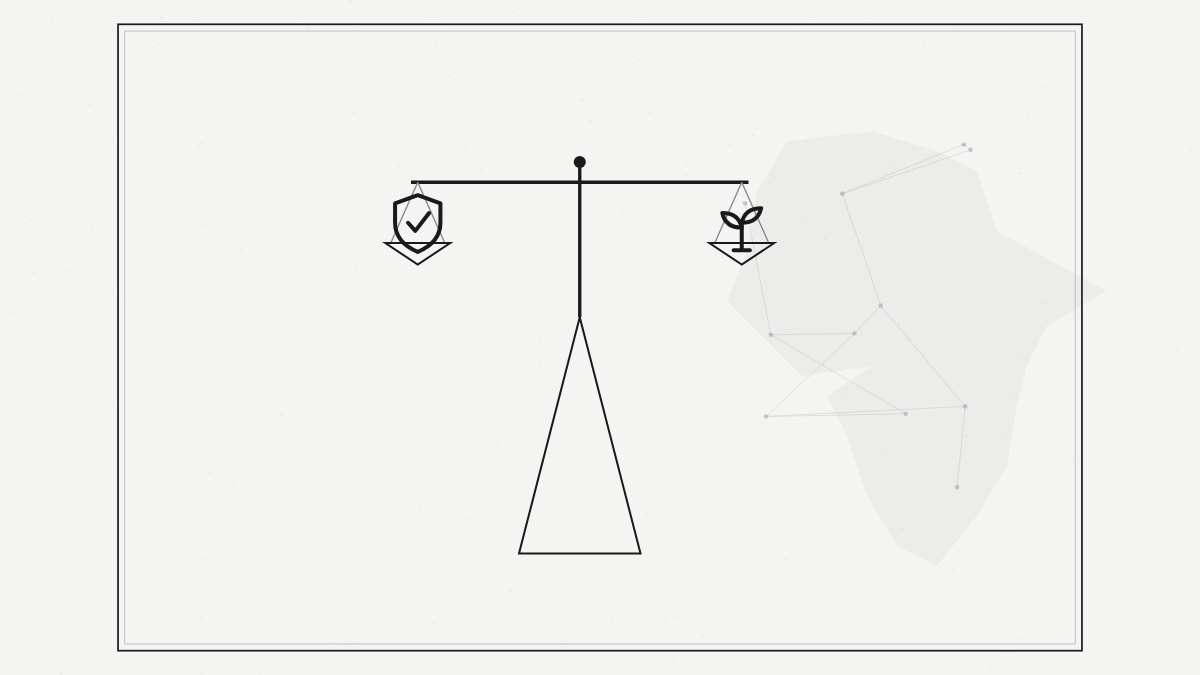
This is the cheaper half of disease management, and the half that is most often neglected. The science sets what is safe to move; clear communication ensures that what is safe actually moves. A rule that exists but is not understood delivers the cost of the restriction without the benefit of the precision the restriction was designed to allow. A published list closes that gap at almost no expense.
Sometimes the fix is not a new rule but a clear one.
The Lesson: Value Chains Need Legible Rules
Botswana's livestock economy is a chain of producers, processors, tanneries, traders and exporters, each making decisions on the strength of what they understand the rules to be. A foot-and-mouth zone that is well designed but poorly explained imposes a tax on every link in that chain, paid in caution and delay. The Department's list removed part of that tax at no cost to disease control, which is close to the definition of a good administrative intervention.
It is a modest move with a clear payoff, and a reminder that the administration of a rule matters as much as the rule itself. For operators planning around Botswana's zoning system, the lesson is that engaging the veterinary authorities for written clarity is often more valuable than lobbying for the rule to change, because legibility unlocks trade that the rule never meant to block.
A value chain runs on rules people can actually read.
Clarifying what may cross a foot-and-mouth zone will not make headlines the way an outbreak does. But for the traders and processors who had stopped moving goods they were entitled to move, it was the difference between a stalled chain and a working one, and that difference is worth more to the real economy than its low profile suggests.
Sources: allAfrica