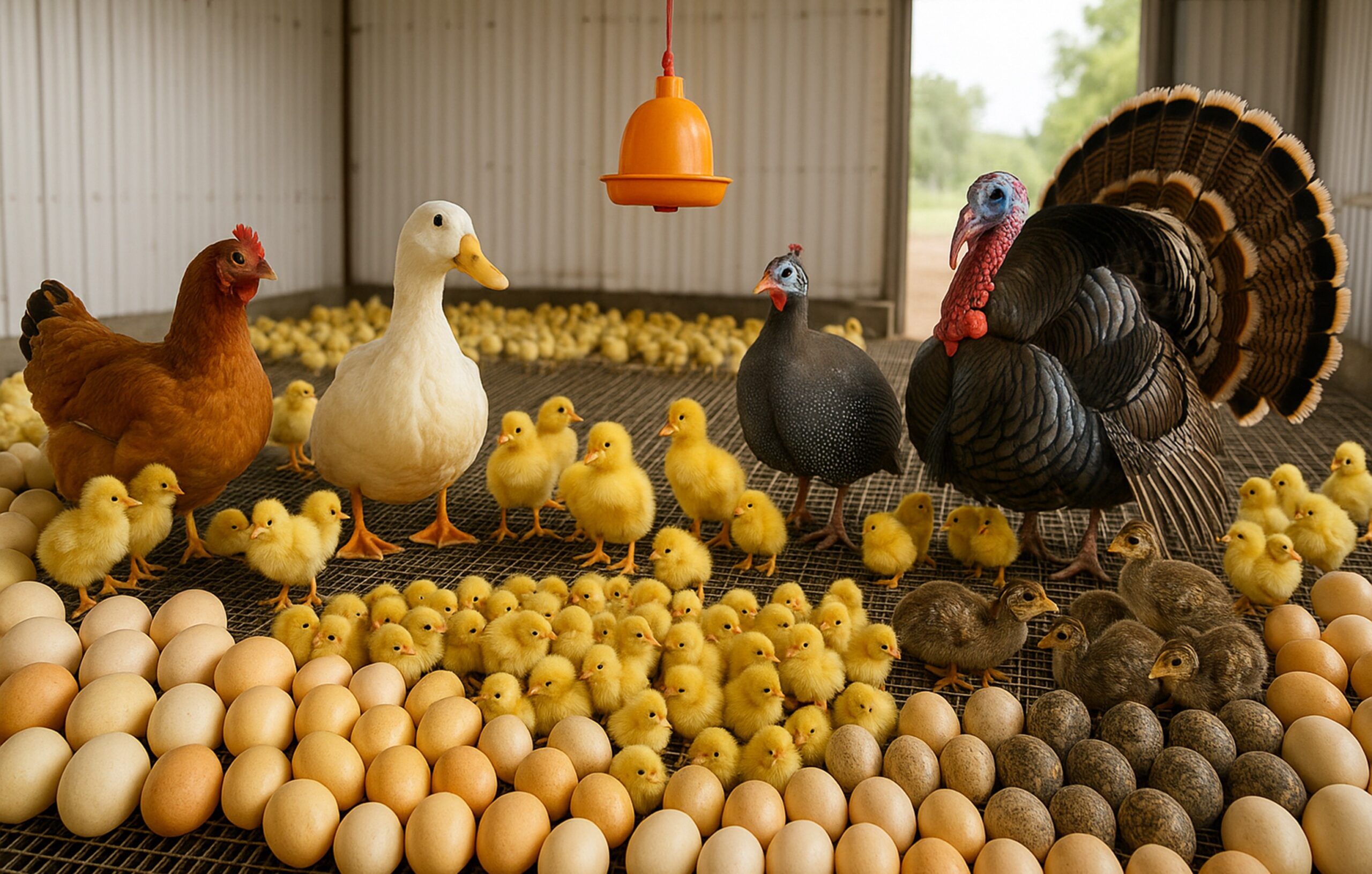
For the poultry farmer, the clock starts not when the bird leaves the shell, but when the egg first feels the warmth of incubation. The length of that journey – 16 days for a quail, 46 days for an ostrich – can determine how quickly capital returns, how often the market is supplied, and how predictable the farm’s cash flow becomes.
In an era where farming is both a technical craft and a business science, understanding incubation timelines is no longer optional – it’s a competitive advantage.
Incubation as a Financial Calendar
Incubation length is more than a biological fact – it’s a business cycle marker.
- Quail (16–23 days): With up to 17 cycles a year, quail offer rapid turnover for farmers seeking quick cash recovery and regular market presence.
- Chicken (21 days): The continental staple, balancing manageable cycles with broad consumer demand.
- Ostrich (42–46 days): Long incubation, fewer cycles, but potentially high single-unit value in meat, leather, and feathers.
FAO poultry cycle data shows that shorter incubation species enable a farmer to recover operational capital faster, while longer cycles require larger financial buffers but may open access to premium markets.
High-Turnover vs. High-Value Models
The decision is not merely about speed. It is about matching turnover rate to capital strength and market opportunity:
- High-turnover species (quail, chicken) keep cash moving and allow for rapid reinvestment.
- High-value species (ostrich, peafowl) suit farmers who can manage longer working capital lock-ups and target luxury buyers.
A South African ostrich producer interviewed in the 2023 Ostrich Industry Report noted that one healthy chick can yield over $300 in leather and $100 in meat, while a small-scale quail farmer in Kenya’s Nyeri County reports 40% higher monthly liquidity by rotating stock every 3 weeks.
Seasonal Market Synchronisation
The ability to align hatching with peak demand seasons – festive periods, weddings, tourist high seasons – is where incubation awareness becomes strategy.
Kenyan hatcheries reported in a 2022 industry survey that pre-holiday hatching schedules increased bird sale prices by 18–25% compared to off-season sales.
For the business-minded farmer, the incubation calendar should be layered onto the sales calendar, ensuring that the farm delivers exactly when demand – and prices – spike.
Ledger Thinking: Recording for Precision
The African Farmer’s Ledger advocates incubation-led record keeping:
- Log each batch with dates, species, egg count, and hatch success rate.
- Record feed, electricity, and labour costs during incubation.
- Note market price at sale and calculate margin per cycle.
This ledger approach not only improves internal decision-making but also increases investor and financier confidence. Data-backed farmers secure loans and partnerships more easily because their operational rhythm is visible and predictable.
The Investment Lens
From a financing perspective:
- Short cycles improve working capital liquidity – investors can see faster returns.
- Long cycles with high-value outputs attract patient capital and niche market investors.
Blended approaches – combining a high-turnover species for cash flow and a long-cycle species for premium yield – can stabilise income and reduce market risk.
In poultry farming, incubation is not just biology – it is economics.
When the farm’s hatching calendar becomes its financial calendar, every egg laid is already part of a planned, profitable future.
Sources:
- FAO (2021) Small-scale poultry production: technical guide.
- ITC Trade Map (2023) – Export statistics for ostrich, guinea fowl, and chicken products.
- South African Ostrich Business Chamber (2023) Annual Industry Report.
- Kenya Poultry Farmers Association (2022) – Market pricing trends study.
- ILRI (2020) – Poultry value chains in East Africa.
 WhatsApp for a Google-Ready Website