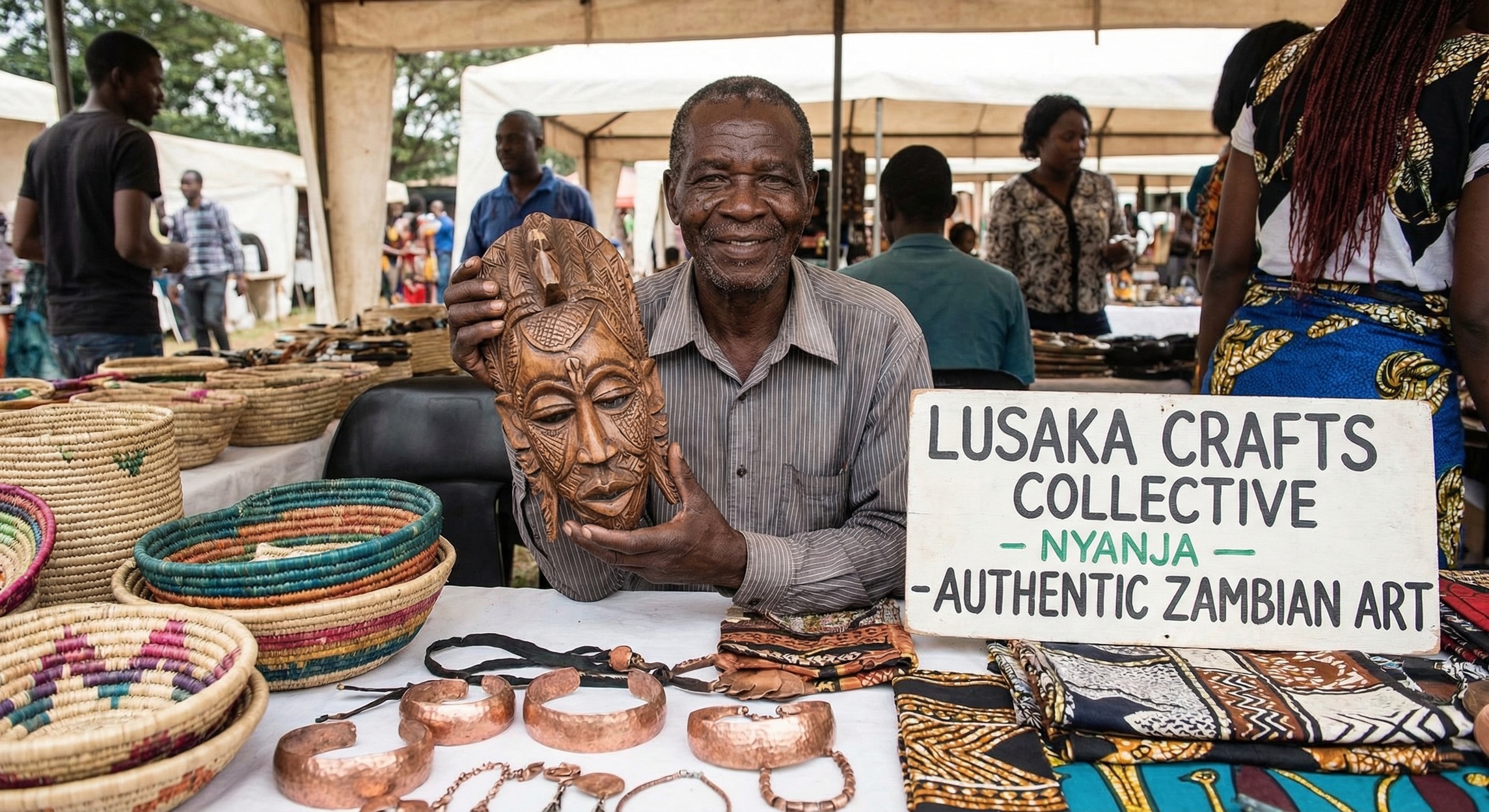
Zambia’s rich cultural heritage is expressed through its vibrant craftsmanship, where skilled artisans create products that blend traditional techniques with modern design. From handwoven baskets to intricate carvings, Zambian crafts are celebrated for their authenticity and beauty. Despite their artistic value, these creations are also economic drivers, providing livelihoods for rural communities and showcasing Zambia’s talent to global markets. This article highlights the importance of supporting local craftsmanship and how artisans can expand their reach.
The Art of Zambian Craftsmanship
Zambian crafts are rooted in cultural traditions passed down through generations. For example, the Lozi people of Western Province are renowned for their basket-weaving skills, creating intricate designs using reeds and natural dyes. These baskets are not only functional but also tell stories of the community’s history and values.
Woodcarving is another popular craft, with artisans crafting masks, sculptures, and decorative items inspired by wildlife and folklore. These pieces are highly sought after by tourists and collectors, providing artisans with a steady income.
Economic Impact of Local Crafts
Craftsmanship is more than an art form—it is a lifeline for many rural communities. By creating and selling their products, artisans generate income to support their families and reinvest in their businesses. Women, in particular, play a significant role in the craft industry, often using earnings to fund their children’s education and household needs.
For instance, the Zambian Handicrafts Collective has helped hundreds of artisans access local and international markets. Through this cooperative, craftspeople receive training in quality control and marketing, enabling them to sell their products at higher prices.
Connecting Local Talent to Global Markets
The global demand for authentic, handmade products presents an enormous opportunity for Zambian artisans. Platforms like Africa Handmade and Etsy allow craftspeople to showcase their work to international buyers. By leveraging these platforms, artisans can earn fair prices and gain recognition for their unique skills.
Sustaining Craftsmanship Through Innovation
To stay competitive, Zambian artisans are incorporating modern designs into their work while preserving traditional methods. For instance, eco-friendly crafts made from recycled materials are gaining popularity among environmentally conscious consumers. Additionally, workshops and training programs equip artisans with skills in branding, packaging, and digital marketing, ensuring their crafts appeal to a wider audience.
The Role of Consumers in Supporting Artisans
Consumers play a vital role in sustaining Zambia’s craft industry. By purchasing handmade products, buyers not only acquire unique items but also support local economies and preserve cultural heritage. Whether buying at a local market or through online platforms, consumers contribute to a cycle of empowerment that uplifts entire communities.
A Future Built on Tradition and Innovation
Zambian craftsmanship is a testament to the country’s creativity and resilience. As artisans continue to innovate and connect with global markets, their work not only preserves cultural traditions but also drives economic growth. Supporting local talent is an investment in Zambia’s future, where art and commerce come together to create lasting impact.
Discover the beauty and economic impact of Zambian craftsmanship. Learn how artisans are preserving cultural traditions while reaching global markets with their handmade creations.
Zambian craftsmanship, handmade products Zambia, traditional crafts Africa, artisan economy Zambia, Ganizo Magazine, Cabanga Media Group, Business in Zambia, Zambian Business
Zambian Handicrafts Collective
https://zambiancrafts.org/
Africa Handmade Marketplace
https://africahandmade.org/
Zambian Ministry of Tourism Programs
https://www.motourism.gov.zm/
 WhatsApp for a Google-Ready Website