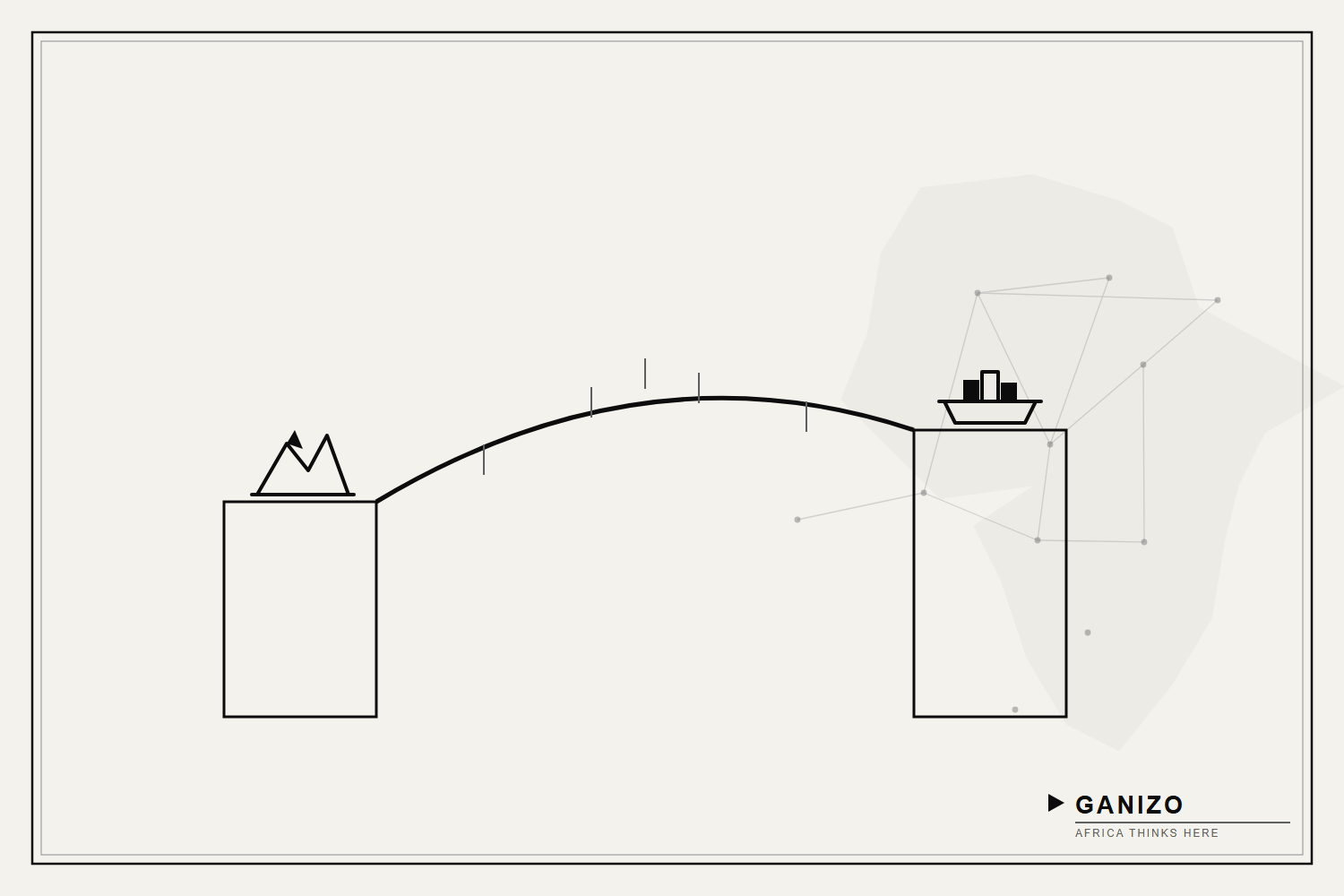
Infrastructure stories are usually told as engineering, but the money is made in the second-order effects. A railway to the Atlantic is not, for an investor, primarily about steel and sleepers. It is about what happens to freight costs, land values, processing margins and trade flows once the line exists. If the Lobito and TAZARA corridors deliver even part of what is promised, the commercial map of Zambia’s interior redraws itself — and the operators who read that map early will price opportunities the rest of the market is still treating as infrastructure news.
The Freight Dividend: The Number That Moves Everything
The single most valuable output of a working corridor is a lower cost to reach a port. For a landlocked exporter, freight is a permanent deduction from every tonne sold, and shortening the distance and time to a coastline changes the economics of anything heavy or bulky. A UNDP policy brief on the corridor sets out how lower transport costs ripple outward into competitiveness for exporters and cheaper inputs for importers. The point for investors is that a freight saving is not a one-off; it is a structural improvement to the return on every export-oriented business along the line, from mining to agriculture.
Where freight falls, previously marginal ventures become viable. That is where the first opportunities sit.
Beyond Copper: The Agricultural Export Opening
The corridor conversation is dominated by minerals, but the more interesting investment angle may be agriculture. Zambia grows more than it can easily sell abroad, partly because the cost of moving perishable and bulky produce to distant ports erodes the margin before it reaches a buyer. A cheaper, faster route to the Atlantic or the Indian Ocean widens the range of crops that can be exported at a profit, which in turn makes commercial farming, storage, cold chain and processing along the corridor more bankable. For investors looking past the obvious mining plays, agricultural exports are the diversification the corridor quietly enables.
The takeaway is that a copper railway is also, unintentionally, a farm-to-port railway.
The Nodes: Logistics Hubs and Industrial Zones
Corridors concentrate value at their junctions. Where a line meets a road, a border or a city, there is demand for warehousing, dry ports, fuel, servicing and the industrial zones that cluster around reliable logistics. The Copperbelt and North-Western Province are natural anchors, but the opportunity extends to any node where cargo has to stop, change mode or be stored. These are the assets that capture corridor value locally rather than letting it roll through — and they tend to reward investors who secure position before the freight volumes arrive and land prices adjust. Industrial zones designed around the line, rather than bolted on afterward, are where processing and light manufacturing can plausibly take root.
The rule is that corridors move goods along the line but build wealth at the nodes.
The Regional Trade Frame: A Bigger Market Than Zambia
The final layer of the investment case is regional. A corridor does not only connect Zambia to an ocean; it connects Zambia’s producers to neighbouring markets and integrates them into wider continental trade under frameworks such as AfCFTA and COMESA. That enlarges the addressable market for anything made or grown along the line and makes Zambia more attractive as a place to base regional distribution. For an investor, the corridor is best understood not as a single asset but as an enabling layer — one that lowers costs, opens new export categories, creates node-based property and logistics plays, and plugs Zambian output into a market far larger than the domestic one. The capital that does well will be the capital that positions for the ecosystem, not just the railway.