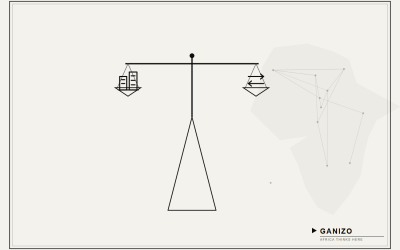

The comfortable version of Zambia’s story treats its democratic record as settled. Power has changed hands peacefully since 1991, the reasoning goes, so it always will. That assumption is the single most dangerous input in any forecast, because reputations are earned over decades and can be spent in a term. The more useful exercise is to hold two futures side by side and ask which indicators tell you, early, which one is arriving.
The question that decides the next decade is not whether Zambia keeps holding elections. It is whether the country can combine its political stability with stronger accountability and growth that reaches the majority. Those three things do not automatically travel together, and the gap between them is where the scenarios diverge.
Scenario One: Deepening
In the stronger path, stability becomes a platform rather than a plateau. The independence of courts, the electoral commission and the press is entrenched in ways that outlast any single government, so accountability operates between elections and not only during them. Growth broadens beyond the enclave of copper and the formal sector, drawing in informal workers, rural communities and the young.
Here the democratic reputation compounds. Lower perceived risk narrows the country’s cost of capital, investment lengthens its horizon, and the dividends of alternation begin to reach the constituencies that have so far watched from the margins. The country’s Eighth National Development Plan frames precisely this pairing of stable democracy with inclusive growth as the intended direction, and this scenario is what delivering on it looks like.
The mechanism that makes deepening self-reinforcing is worth naming. Broad-based growth widens the constituency with a material stake in stability, and a larger stake-holding public strengthens the demand for the accountability that protects it. In the strong path prosperity and institutions pull in the same direction rather than trading off against each other, and each turn of the cycle makes the next easier to sustain.
Scenario Two: Drift
In the weaker path, the form of democracy survives while the substance thins. Elections continue, but institutional pressure, polarisation and the uneven application of the law gradually erode the independence that gives alternation its meaning. Growth stays concentrated, inequality remains entrenched, and formal rights deliver little to those without economic security.
Drift is rarely announced. It shows up as postponed reforms, as oversight bodies that answer to the government of the day, and as a civic base too stretched to hold power to account. The reputation does not collapse; it quietly depreciates, and the peace premium the economy relies on narrows with it.
Drift is also cheaper to choose in the short run, which is what makes it dangerous. Every deferred reform frees resources and avoids friction today while quietly raising the cost of the eventual correction. By the time the depreciation is visible in the arrivals of capital or the confidence of markets, the institutional ground has usually already shifted, and recovering it is far harder than holding it would have been.
Indicators to Track Toward 2031
The two paths are distinguishable early if you watch the right signals rather than the rhetoric. Four indicators carry most of the information. First, the demonstrated independence of the courts and the electoral commission, tested by whether their decisions bind the powerful. Second, the strength and freedom of the press and civil society between elections. Third, the breadth of growth, read through employment, poverty and inequality rather than headline output alone. Fourth, whether reforms are converted into durable law and budget lines that a future losing incumbent could not easily unwind.
A fifth, softer signal sits beneath these: the tone of political competition itself, and whether rivals treat one another as opponents to be beaten or as enemies to be removed. That register is harder to measure but it often turns before the formal indicators do, which makes it an early warning worth watching.
Movement on all four points to deepening. Stalling on them points to drift, whatever the official framing says. The instruction for investors, policymakers and citizens is the same: judge the next decade by these gauges, not by the assumption that the record protects itself. Zambia’s democratic future is a choice to be made repeatedly, not an inheritance to be spent.